Wednesday, January 16, 2013

Monday, January 14, 2013
Nursing Intervention of AIDS
Nursing intervention
HIV/AIDS Nurses are trained to provide care for patients infected with AIDS, a deadly, incurable disease that attacks a patient’s immune system. These nurses help patients cope with and manage the different emotional and physical symptoms that come with having their disease. Many HIV/AIDS Nurses work in community or public health, educating at risk groups about safe sex and the dangers of sharing needles.
 Thing to do:
 Thing to do:
- Connect patients to support groups and services
- Teach patients how to prevent the spread of the disease
- Administer treatments and medications

JOBS Characteristics:
- Structured
- Patient-facing
- Research-oriented
Diagnosing of AIDS
Diagnosing AIDS
Diagnosing Aids can be done using blood, saliva, or by using cells from the inside of the cheek. Because Aids carries such stigma and prejudices, great care is taken to protect the identity of those being tested. This is done in two ways:
- Confidential for a Fee - Your name will be linked to the test but the test results are kept confidential. Usually there is a fee assessed for these tests but most insurance plans will cover the charge. These tests are usually used by hospitals, labs, and doctor's offices.
- Anonymous and Free - Tests can also be anonymous, meaning your name is not linked to the test at all. A random identifier using numbers, letters, or any fake name of your choice is used instead of your real name. The results are confidential, but even if someone gets the results by mistake, they would be unable to link you to the result. These tests are usually free and offered in community HIV agencies or health departments.

Acquired Immune Deficiency Syndrome, or AIDS, is a condition that describes an advanced state of HIV infection. With AIDS, the virus has progressed, causing significant loss of CD4cells, weakening the immune system to such an extent that the body is at risk for those illnesses and infections said to be "AIDS-defining." Those illnesses and infections are said to be AIDS-defining because they mark the onset of AIDS. A person is also diagnosed with AIDS when their CD4 count falls below 200 cells per cubic millimeter of blood, the level at which the immune system can no longer protect a person from the AIDS-defining illnesses and infections.
Modes of Transmission
Modes of Transmission Virus HIV/AIDS
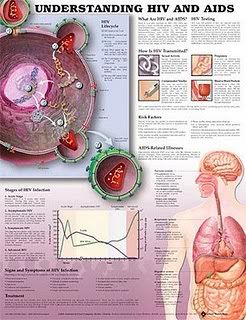
HIV is the Human Immunodeficiency Virus, a virus that attacks the human immune system.AIDS stands for Acquired Immuno Deficiency Syndrome. AIDS develops after a virus (HIV) attacks the immune system for five to ten years or more. Immune system becomes weak, and one or more diseases can occur. Because of weak immune system earlier, some diseases can be more severe than usual.
HIV is found in most body fluids, namely:
1. Blood
2. Semen
3. Vaginal fluid
4. Breast milk
HIV is transmitted through:
1. Making love is made of blood, semen, or vaginal fluids from HIV-positive people into the bloodstream of people who have not infected (ie sexual intercourse without a condom made through the vagina or anus; also through the mouth, even with a small possibility).
2. Wearing syringes used another person, and which contains HIV-infected blood.
3. Received a blood transfusion infected with HIV.
4. Of mothers of HIV-positive precipitates to the baby in the womb, during childbirth, and if breast-feeding.
Having a toothbrush and razor itself, because in addition to personal hygiene, if there would be no risk of blood infection with other viruses that carried the blood (such ashepaditis), not just HIV.
HIV is not transmitted through:
1. Shook hands, hugged
2. Kissing
3. Coughing, sneezing
4. Wearing such household utensils, telephone, bathroom, toilet, bedroom, etc..
5. Mosquito bites
6. Work, school, driving with
7. Wearing public facilities such as swimming pools, public toilets, saunas, etc.
HIV can not be transmitted through the air. The virus is also quick to die if it is outside the body. This virus can be killed if that conceived him bodily fluids cleaned with bleach (bleach) as Bayclin or Chlorox, or with soap and water. HIV can not be absorbed by the skin does not hurt.
Pathophysiology
The Pathophysiology of HIV/AIDS is complex.
After the virus enters the body there is a period of rapid viral replication, leading to an abundance of virus in the peripheral blood. During primary infection, the level of HIV may reach several million virus particles per milliliter of blood.

This response is accompanied by a marked drop in the numbers of circulating CD4+ T cells. This acute viremia is associated in virtually all people with the activation of CD8 T cells, which kill HIV-infected cells, and subsequently with antibody production, or seroconversion. The CD8+ T cell response is thought to be important in controlling virus levels, which peak and then decline, as the CD4+ T cell counts rebound. A good CD8+ T cell response has been linked to slower disease progression and a better prognosis, though it does not eliminate the virus.
The pathophysiology of AIDS is complex.Ultimately, HIV causes AIDS by depleting CD4+ T helper lymphocytes. This weakens the immune system and allows opportunistic infections. T lymphocytes are essential to the immune response and without them, the body cannot fight infections or kill cancerous cells. The mechanism of CD4+T cell depletion differs in the acute and chronic phases.
During the acute phase, HIV-induced celllysis and killing of infected cells by cytotoxic T cells accounts for CD4+ T cell depletion, although apoptosis may also be a factor. During the chronic phase, the consequences of generalized immune activation coupled with the gradual loss of the ability of the immune system to generate new T cells appear to account for the slow decline in CD4+ T cell numbers.
Although the symptoms of immune deficiency characteristic of AIDS do not appear for years after a person is infected, the bulk of CD4+ T cell loss occurs during the first weeks of infection, especially in the intestinal mucosa, which harbors the majority of the lymphocytes found in the body. The reason for the preferential loss of mucosal CD4+ T cells is that a majority of mucosal CD4+ T cells express the CCR5 coreceptor, whereas a small fraction of CD4+ T cells in the bloodstream do so.
HIV seeks out and destroys CCR5 expressing CD4+ cells during acute infection. A vigorous immune response eventually controls the infection and initiates the clinically latent phase. However, CD4+ T cells in mucosal tissues remain depleted throughout the infection, although enough remain to initially ward off life-threatening infections.
Continuous HIV replication results in a state of generalized immune activation persisting throughout the chronic phase. Immune activation, which is reflected by the increased activation state of immune cells and release of proinflammatory cytokines, results from the activity of several HIV gene products and the immune response to ongoing HIV replication. Another cause is the breakdown of the immune surveillance system of the mucosal barrier caused by the depletion of mucosal CD4+ T cells during the acute phase of disease.
This results in the systemic exposure of the immune system to microbial components of the gut’s normal flora, which in a healthy person is kept in check by the mucosal immune system. The activation and proliferation of T cells that results from immune activation provides fresh targets for HIV infection. However, direct killing by HIV alone cannot account for the observed depletion of CD4+ T cells since only 0.01–0.10% of CD4+ T cells in the blood are infected.
A major cause of CD4+ T cell loss appears to result from their heightened susceptibility to apoptosis when the immune system remains activated. Although new T cells are continuously produced by the thymus to replace the ones lost, the regenerative capacity of the thymus is slowly destroyed by direct infection of its thymocytes by HIV. Eventually, the minimal number of CD4+ T cells necessary to maintain a sufficient immune response is lost, leading to AIDS.
Prevention of AIDS
Prevention
See: Safe sex to learn how to reduce the chance of catching or spreading HIV and other sexually transmitted illnesses
Tips for preventing HIV/AIDS:
- Do not use illicit drugs and do not share needles or syringes. Many communities now have needle exchange programs, where you can get rid of used syringes and get new, sterile ones. These programs can also provide referrals for addiction treatment.
- Avoid contact with another person's blood. You may need to wear protective clothing, masks, and goggles when caring for people who are injured.
- Anyone who tests positive for HIV can pass the disease to others and should not donate blood, plasma, body organs, or sperm. Infected people should tell any sexual partner about their HIV-positive status. They should not exchange body fluids during sexual activity, and should use preventive measures (such as condoms) to reduce the rate of transmission.
- HIV-positive women who wish to become pregnant should seek counseling about the risk to their unborn child, and methods to help prevent their baby from becoming infected. The use of certain medications dramatically reduces the chances that the baby will become infected during pregnancy.
- The Public Health Service recommends that HIV-infected women in the United States avoid breastfeeding to prevent transmitting HIV to their infants through breast milk.

Safer sex practices, such as latex condoms, are highly effective in preventing HIV transmission. HOWEVER, there is a risk of acquiring the infection even with the use of condoms. Abstinence is the only sure way to prevent sexual transmission of HIV.
The riskiest sexual behavior is receiving unprotected anal intercourse. The least risky sexual behavior is receiving oral sex. There is some risk of HIV transmission when performing oral sex on a man, but this is less risky than unprotected vaginal intercourse. Female-to-male transmission of the virus is much less likely than male-to-female transmission. Performing oral sex on a woman who does not have her period has a low risk of transmission.
HIV-positive patients who are taking antiretroviral medications are less likely to transmit the virus. For example, pregnant women who are on effective treatment at the time of delivery, and who have undetectable viral loads, give HIV to their baby less than 1% of the time, compared with 13% to 40% of the time if medications are not used.
The U.S. blood supply is among the safest in the world. Nearly all people infected with HIV through blood transfusions received those transfusions before 1985, the year HIV testing began for all donated blood.
If you believe you have been exposed to HIV, seek medical attention IMMEDIATELY. There is some evidence that an immediate course of antiviral drugs can reduce the chances that you will be infected. This is called post-exposure prophylaxis (PEP), and it has been used to prevent transmission in health care workers injured by needlesticks.
There is less information available about how effective PEP is for people exposed to HIV through sexual activity or injection drug use, but it appears to be effective. If you believe you have been exposed, discuss the possibility with a knowledgeable specialist (check local AIDS organizations for the latest information) as soon as possible. Anyone who has been sexually assaulted should consider the potential risks and benefits of PEP.
Treatment
Treatment
There is no cure for AIDS at this time. However, a variety of treatments are available that can help keep symptoms at bay and improve the quality and length of life for those who have already developed symptoms.
 Antiretroviral therapy suppresses the replication of the HIV virus in the body. A combination of several antiretroviral drugs, called highly active antiretroviral therapy (HAART), has been very effective in reducing the number of HIV particles in the bloodstream. This is measured by the viral load (how much free virus is found in the blood). Preventing the virus from replicating can improve T-cell counts and help the immune system recover from the HIV infection.
HAART is not a cure for HIV, but it has been very effective for the past 12 years. People on HAART with suppressed levels of HIV can still transmit the virus to others through sex or by sharing needles. There is good evidence that if the levels of HIV remain suppressed and the CD4 count remains high (above 200 cells/mm3), life can be significantly prolonged and improved.
However, HIV may become resistant to one combination of HAART, especially in patients who do not take their medications on schedule every day. Genetic tests are now available to determine whether an HIV strain is resistant to a particular drug. This information may be useful in determining the best drug combination for each person, and adjusting the drug regimen if it starts to fail. These tests should be performed any time a treatment strategy begins to fail, and before starting therapy.
When HIV becomes resistant to HAART, other drug combinations must be used to try to suppress the resistant strain of HIV. There are a variety of new drugs on the market for treating drug-resistant HIV.
Treatment with HAART has complications. HAART is a collection of different medications, each with its own side effects. Some common side effects are:
- Collection of fat on the back ("buffalo hump") and abdomen
- Diarrhea
- General sick feeling (malaise)
- Headache
- Nausea
- Weakness
When used for a long time, these medications increase the risk of heart attack, perhaps by increasing the levels of cholesterol and glucose (sugar) in the blood.
Any doctor prescribing HAART should carefully watch the patient for possible side effects. In addition, blood tests measuring CD4 counts and HIV viral load should be taken every 3 months. The goal is to get the CD4 count as close to normal as possible, and to suppress the amount of HIV virus in the blood to a level where it cannot be detected.
Other antiviral medications are being investigated. In addition, growth factors that stimulate cell growth, such as erthythropoetin (Epogen, Procrit, and Recomon) and filgrastim (G-CSF or Neupogen) are sometimes used to treat AIDS-associated anemia and low white blood cell counts.
Medications are also used to prevent opportunistic infections (such as Pneumocystis jiroveci pneumonia) if the CD4 count is low enough. This keeps AIDS patients healthier for longer periods of time. Opportunistic infections are treated when they happen.
Subscribe to:
Posts (Atom)